
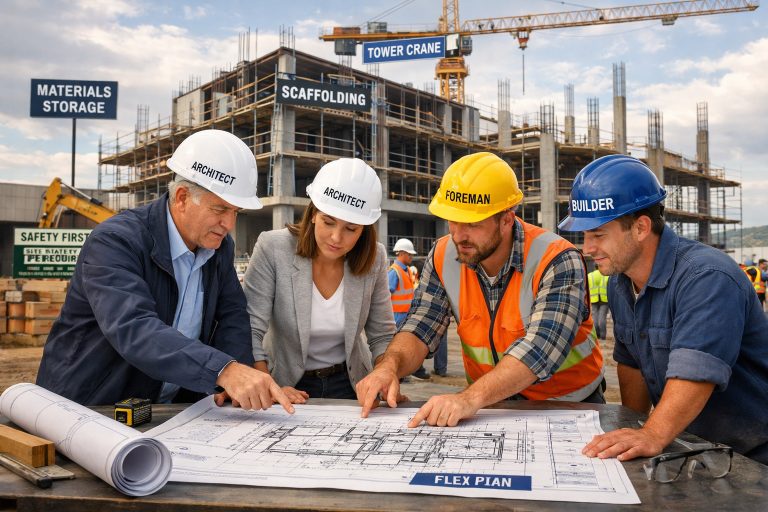
Key Takeaways
- Design-build combines design and construction services into a single contract, enhancing efficiency and accountability.
- This approach fosters collaboration among all stakeholders from the project’s inception.
- Design-build can lead to faster project completion and cost savings.
- It is increasingly adopted in both public and private sectors.
In the ever-evolving construction industry, traditional processes often lead to inefficiencies and communication barriers. The design-build approach stands out as a modern solution that combines design and construction services under a single agreement. By integrating these services, the process becomes more streamlined, allowing for a more collaborative project environment. To better understand how design-build is transforming the industry and how you can benefit from it, click here to explore in-depth service offerings.
This integrated design-build model enhances efficiency and accountability by having a single entity manage both design and construction phases. It encourages collaboration from initial design through to project delivery, benefiting both public and private-sector clients by achieving construction goals more quickly and at a reduced cost. Design-build is particularly effective for complex projects that require innovative solutions and team adaptability, enabling rapid responses to challenges and less fragmentation than traditional methods. The growing adoption of design-build is reflected in government procurement updates and in private organizations’ pursuit of predictable project outcomes, further solidifying its reputation for on-time, on-budget project delivery.
What Is Design-Build?
Design-build is a project delivery system in which one entity, commonly called the design-build team, manages both design and construction. Unlike the traditional design-bid-build method, where the owner contracts separately with a designer and a builder, design-build brings both under a single contract. The result is an integrated team that works from project conception to completion, minimizing risks tied to communication gaps and helping ensure a cohesive vision from start to finish. According to the Design-Build Institute of America, this method leads to more predictable outcomes and fosters a unified workflow.
Benefits of Design-Build
Organizations that turn to design-build enjoy a variety of compelling advantages:
- Enhanced Collaboration: With design and construction experts integrated from day one, teams proactively solve issues and innovate together. This early involvement often results in more responsive building solutions that meet the owner’s needs.
- Time Efficiency: By overlapping design and construction phases, projects move forward faster and avoid common delays associated with handoffs or redesigns.
- Cost Savings: Budget efficiencies are achieved through ongoing value engineering and early cost input from builders, enabling better control over overall spending.
- Single Point of Responsibility: Owners benefit from a single point of contact, which simplifies communications, accelerates decision-making, and improves accountability for project quality and schedule.
Design-Build in Public Projects
The public sector increasingly turns to design-build to address pressing infrastructure needs efficiently. Cities and states frequently utilize this approach for transportation, educational, and civic buildings. For example, New York City’s Department of Design and Construction has seen measurable time and cost savings by upgrading its delivery models. Projects like bridges and schools, which are often under tight deadlines, benefit significantly from design-build’s holistic process.
Public owners are drawn to design-build not only for its ability to accelerate schedules but also for its role in reducing construction disputes. Fewer change orders and clearer communication pipelines help cities deliver crucial projects to their constituents with fewer surprises along the way. Industry adoption continues to expand as legislative efforts in many states make design-build legal for a wider range of public projects.
Challenges and Considerations
While design-build delivers efficiency, it is not without challenges. A primary consideration is substantial upfront planning. Owners must clearly define project goals, anticipated quality levels, and essential features early in the process. This clarity helps ensure the selected design-build team can properly align their efforts from the outset.
- Initial Planning: The need for thorough upfront planning can extend the preconstruction timeline. Owners must commit to detailed programming, budgeting, and project scheduling at an early stage.
- Selection Process: Picking the right design-build partner is imperative. Firms must demonstrate proven experience and alignment with the owner’s objectives. Many owners use competitive evaluations that weigh both qualifications and price.
- Risk Management: A well-defined contract should balance risk allocation between the owner and the design-build entity to minimize disputes and foster mutual trust throughout the project lifecycle.
Future of Design-Build
The design-build model is projected to continue its robust growth. According to industry forecasts, a substantial percentage of construction spending over the next five years will be through design-build contracts. Its versatility is proving especially valuable as demand for complex, efficiency-focused projects increases. Design-build’s principles of transparency and integration are also adaptable to technology advancements, such as virtual design tools and modular construction techniques.
In summary, design-build is increasingly favored in the modern construction landscape. It offers clients a streamlined, reliable, and innovative pathway from concept through to project completion. As more organizations recognize its potential, design-build is positioned to play a central role in shaping the future of construction for both private and public stakeholders.
