
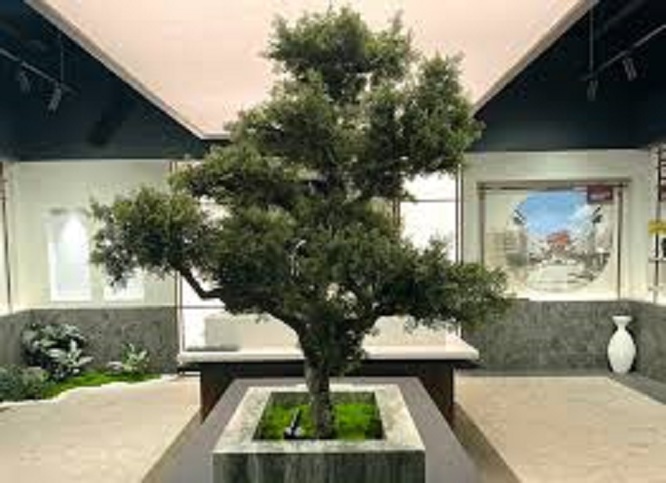
Why Greenery Belongs in the Modern Home Office
The transition to remote and hybrid work has encouraged many people to rethink their living spaces, with home offices taking center stage in daily routines. Visual comfort has become a driving factor in workspace design, fueling interest in greenery as an essential decorative element. Green plants are known to soften sharp architectural lines and break up expansive blank walls, which contribute to a more soothing atmosphere. They also provide a focal point for the eyes, giving people a mental break during long hours in front of screens. Despite these advantages, maintaining live plants is not always practical, especially in rooms with limited light or for individuals who prefer low-maintenance environments. Artificial bonsai trees present an effective solution, offering the appeal and tranquility of natural greenery without the demands of regular care, making it easy to establish a visually engaging workspace anywhere in the home.
The Appeal of Bonsai Aesthetics in Small Workspaces
Bonsai trees symbolize harmony, patience, and attentiveness, values that resonate strongly with many professionals. The carefully shaped canopies and exposed trunks provide a captivating contrast to the straight lines found in modern tech setups. On a practical level, artificial bonsai fits neatly on compact desks or shelves, making them an ideal choice for small spaces where every inch matters. Their sculptural forms turn a workspace into a more intentional and inspiring environment, while their minimal footprint leaves plenty of room for laptops, books, and daily essentials. Selecting a bonsai style that echoes the room’s decor—be it minimalist, flowering, or abstract—can subtly strengthen the overall mood and purpose of the office.
Choosing the Right Artificial Bonsai for Your Home Office
Selecting an artificial bonsai means considering a blend of aesthetics and practicality. Scale is an important factor; a bonsai that is too large can overwhelm a desk, while one that is too small may get lost among everyday items. Neutral containers in ceramic or stone work well with diverse design schemes, whether Scandinavian, mid-century, or contemporary. Foliage style is also important—hyper-realistic leaves and bark elevate the illusion of nature, while more expressive or stylized options communicate artistic flair. To find options that capture both realism and style, browsing collections dedicated to quality and variety can spark inspiration. For those seeking the most realistic artificial bonsai tree here, attention to craftsmanship, color tone, and lifelike detail ensures the piece will complement both the function and atmosphere of the office. Choosing models that are easy to clean and reposition safeguards long-term enjoyment without extra hassle.
Practical Placement and Styling Ideas
Placement is key to making the artificial bonsai a meaningful part of the workspace. Positioning the tree within a natural line of sight allows it to serve as a refreshing visual pause while working. A floating shelf or cabinet can free up valuable desk space in smaller rooms. Creating a vignette—with the bonsai, a favorite pen holder, or a framed photo—lends the office a curated feel and injects personal character into the arrangement. Matched pairs of bonsai can introduce a sense of symmetry, framing a window or shelving and visually expanding the area. Where natural daylight is present, situating the bonsai to catch a gentle glow enhances its realism, shadow, and depth, even in artificial varieties.
Integrating Artificial Bonsai Into Broader Design Schemes
Artificial bonsai trees also work well in open-concept homes, where they can serve as subtle boundaries between work zones and living areas. A bonsai, complemented by accessories like a focused lamp or textured rug, marks the transition from professional to personal life, especially in spaces with blurred roles. In setups dominated by technology, the organic silhouette of a bonsai brings balance to the visual impact of screens and cables. For those who value tactile, natural materials like wood or linen, introducing a bonsai reinforces warmth and comfort. Even in cooler, more industrial environments, it provides a gentle touch to offset stark finishes. Over time, incorporating a favorite bonsai into daily rituals—moving it into prime position at the start of each workday, or glancing at it during breaks—can strengthen the mental boundaries that are crucial for healthy and productive remote work routines.
